2026年2月24日星期二

Injection Mold Process


Injection Mold Process

[caption id="attachment_4686" align="alignnone" width="300"]Injection Mold Process Injection Mold Process[/caption]
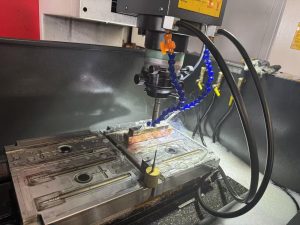
Core Tooling Technologies: Precision Machining Excellence

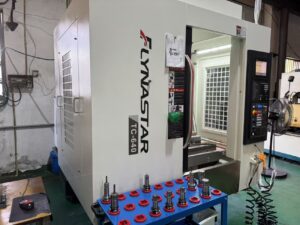
At the heart of a high-quality injection mold lies precision machining. We invest in high-end equipment and master-level craftsmanship to ensure every cavity, core, and insert meets your exact specifications. Our toolroom integrates three critical machining technologies:

1. High-Speed CNC Machining (The Backbone of Accuracy)

Our CNC department focuses on rapid material removal while maintaining tight dimensional tolerances. By using high-speed spindles and advanced CAM programming, we minimize manual benchwork and ensure consistency.

  • Capabilities: We handle everything from large mold bases to intricate electrode milling.

  • Precision: Achievable tolerances up to ±0.005mm.

  • Surface Finish: Optimized tool paths result in superior surface finishes, reducing the need for extensive polishing and preventing part drag marks.

  • Hard Milling: Capability to machine hardened tool steel (up to 58-60 HRC), ensuring long-term mold stability and alignment.

2. Precision EDM – Electrical Discharge Machining (The Art of Complexity)

For geometries that traditional cutting tools cannot reach—such as sharp internal corners, deep ribs, and complex textures—our EDM process is indispensable.

  • Intricate Details: Perfect for creating "blind" pockets and thin-walled features with high aspect ratios.

  • Mirror Finishing: Our "Mirror EDM" capability produces high-gloss surfaces directly on the steel, essential for clear plastic parts or medical-grade finishes.

  • Electrode Management: We use high-grade graphite or copper electrodes, precision-milled on our CNCs, to ensure the spark erosion perfectly matches the 3D design.

  • Uniform Texture: Ensures consistent VDI surface finishes across the entire mold cavity.

3. Precision Wire-Cutting (The Standard for Inserts & Cores)

Wire-cut EDM is our go-to technology for through-hole features, complex parting lines, and high-precision mold inserts.

  • Extreme Tolerance: Ideal for fitting interlocking mold components where a "zero-clearance" fit is required.

  • Vertical Accuracy: Ensures perfectly straight walls and tapered angles for lifters and sliders.

  • Material Integrity: The non-contact nature of wire-cutting prevents mechanical stress on the steel, preserving the material properties of expensive tool steels like S136 or H13.

  • Repeatability: Highly automated process ensures that replacement inserts are identical to the originals, simplifying your long-term mold maintenance.

Technical Specifications Table

FeatureCNC MachiningEDM (Sink)Wire-Cut EDM
Primary UseRoughing & FinishingDeep ribs, Sharp cornersInserts, Sliders, Ejector holes
Min. Corner Radius0.1 mm0.02 mm0.05 mm
Max. HardnessUp to 60 HRCNo limit (any conductive)No limit (any conductive)
Surface FinishRa 0.8 - 1.6 μmRa 0.2 μm (Mirror)Ra 0.4 - 0.8 μm
Best ForSpeed & Bulk removalComplexity & TexturePrecision & Straightness

Our Quality Commitment

Every machined component undergoes rigorous inspection before assembly. We utilize CMM (Coordinate Measuring Machines) and Optical Projectors to verify that the CNC, EDM, and Wire-cut outputs align 100% with the digital twin of your mold.

"Precision in the toolroom means reliability in your production line."

[caption id="attachment_4886" align="alignnone" width="300"]Injection Mold Process Injection Mold Process[/caption]
Our Core Technical Capabilities

1. Advanced Tooling & Mold Design

Our engineering department utilizes state-of-the-art CAD/CAM/CAE software to ensure every mold is optimized for the production cycle.

  • DFM (Design for Manufacturing): We provide comprehensive DFM reports before steel cutting to identify potential issues such as sink marks, air traps, or gate vestiges.

  • Multi-Cavity Expertise: We design high-efficiency multi-cavity molds (2 to 128 cavities) to significantly reduce unit costs for high-volume orders.

  • Hot & Cold Runner Systems: Expert integration of systems like Yudo, Mold-Masters, and Husky to optimize material usage.

2. Precision Manufacturing Processes

We utilize a hierarchy of machining technologies to guarantee tolerances as tight as ±0.01mm:

  • High-Speed CNC Machining: For rapid and precise removal of material and complex geometries.

  • Precision EDM (Electrical Discharge Machining): For sharp corners, deep ribs, and intricate textures that mechanical cutting cannot reach.

  • Wire-Cut EDM: Essential for producing high-precision inserts and complex mold cores.

3. High-Performance Injection Molding

Our facility in Shanghai is equipped with advanced injection machines (ranging from 50T to 1200T) capable of handling a wide array of resins:

  • Engineering Plastics: ABS, PC, Nylon (PA6/PA66), POM, PBT.

  • High-Performance Polymers: PEEK, PPS, PSU, LCP.

  • Elastomers: TPE, TPU, Silicon.


Our Process: From Concept to T1 Sample

  1. Inquiry & Quotation: 24-48 hour response time with preliminary cost analysis.

  2. DFM & Mold Design: Detailed structural analysis and 3D design approval.

  3. Tooling Fabrication: Weekly progress reports with photos and videos.

  4. Mold Trial (T1): Sample submission for customer validation.

  5. Quality Inspection: Full dimensional report using CMM and projector.

  6. Mass Production or Mold Shipping: Safe seaworthy/airworthy packaging.


The advantages of plastic medical products


Plastic applications and advantages in the medical industry

Plastic application in the medical industry:

Medical equipment related to the pharmaceutical industries, machinery, electronics, plastics, etc., wherein the
plastic rapid development of medical devices. Since the 1930s people first used synthetic polymer materials.
Since celluloid film is formed as an artificial kidney dialysis membrane used in clinical success. Polymer
materials are gradually replacing traditional inorganic materials such as metal, glass, ceramic, apatite stone
for the preparation of medical devices. The advantages of plastic medical products.
 
 
This is the reason:

(1)Polymer material having good mechanical properties and chemical stability, more suitable for medical use;

(2) Polymer material rich source of inexpensive. Disposable medical supplies made for avoiding the problem of
sterilization. And secondary infection due to the high cost of traditional materials and products have caused
repeated use;
 
(3) Having a plastic or modified more easily get a good histocompatibility and blood compatibility of products;
 
(4) Plastic low production costs, for a variety of molding methods, ease of processing into complex shapes. And the development of new medical products.
 

Plastics in the medical industry advantages:

 
The advantages of plastic medical products. From medicines and pharmaceutical packaging. The needle tube, hose, disposable surgical instruments. And other medical equipment can be seen in the presence of plastic instruments.
 
The disposable medical device market demand potential is why so big, its main advantage is the following aspects:

1, Lightweight, effort, will help reduce fatigue caused by surgery doctors for a long time.

2, Toughness is good, strong anti-permeability, durability, some plastics can also be used normally at high temperatures.

3, Transparent, medical procedures can be better observed, especially during surgery.

4, Easy to shape, for the production of a variety of shapes, complex medical equipment, and supplies. And
simply use the low-cost production process. High-temperature sterilization using disinfectant or corrosion does
not occur or the color change phenomenon.

5, Compared to metals and other raw materials, low cost. More suitable for the production of disposable
consumables. After sterilization as packaging materials, help to reduce the risk of infection.

6, Compared with ceramic or glass and other fragile materials. The use of more safety, especially as packaging materials.
 
With the increase in the proportion of population growth and an aging population. The demand for plastic medical equipment continued to expand, particularly into the human body equipment. The use of medical equipment from a single to diversified development. The volume size is shrinking. Now equipment can replace conventional multiple pieces of equipment. Because of the many outstanding advantages of plastic medical equipment. The pharmaceutical industry in the future course of development, it’s market share and influence will grow.

An Injection Mold Testing


You have to have a mold testing sample

Someone will tell you that a good mold doesn’t need to be tested, and that would cost you extra money, but we’ve been doing this for years. Testing is usually necessary, it will help you to find a lot of questions, we only from the technical point of view of the need to do an injection mold testing.

  1.  Real injection mold test products are completely different from prototype making, hardness, shrinkage, flatness are different.
  2.  The product assembly after the mold test allows you to understand the product design and assembly of the real problem.
  3.  I Will let you know whether the gate and ejector design are reasonable.
  4.  I Will let you know whether the design of the cooling system is reasonable.
  5. You can know the exhaust condition, slider, oblique roof, gas ejector, spring ejection, and other parts of the operation. Like a car, taking to the streets without a performance test is dangerous.  Every new mold for an accident, the same as a new car on the road.
Mold Testing
Mold Testing

Injection mold testing instruction and each step

Mold Testing
Mold Testing
Mold Testing
Mold Testing
Mold Testing
Mold Testing
Mold Testing
Mold Testing
  • All materials except PE/PP need to be dried before mold test. This is the standard of our mould company.
  •  Position the mold on the center hole of the injection molding machine and align it. Set the clamping force at half the rated capacity. In the injection molding process, if burrs occur under injection pressure, the clamping force can be gradually reduced until the burr disappears, and the service life of the Die can be obviously increased by this method.
  •  The opening speed, pressure, and position of the mould should be adjusted appropriately. Note that the low-pressure protection is only suitable for the new type of mould, so it is of little use to the old mould, so we usually recommend that the customer mould products should be produced in our company, and some of our peers have great problems with the quality of the mould. So mold making costs are not the cheaper the better. In the first test mode, Die slider, the ejection speed can not be too fast. For a core-pulling mold, the first to determine whether it works well. Otherwise, the Die will be damaged in the wrong circumstances, and even the whole cavity will be damaged.
  •  PE or PP materials are usually used to clean the barrel for viscosity and friction, respectively. The material temperature should be kept between 220 ℃ and 240 ℃. The stroke is shortened and a certain back pressure is applied.
  •  Condition setting / injection / pressure, speed / time / quantity / position, etc. According to product conditions, injection pressure/injection speed/quantity is set from low to high. The cooling time/injection time should be gradually shortened when the product is formed, to prevent glue and overcharge.
  •  Packing pressure, mainly 5~10mm packaging material, must be applied.
  •  In the case of a die with a straight hydraulic clamping system, the adequacy of the clamping force must be checked, and in the case of the elbow rod type, the crosshead must be checked to prevent the mould from being pushed backward during the injection process, So as to avoid the mold damage caused by the big burr leak.
  • During our cooperation with foreign customers for many years, we learned that the really good quality mold is no release agent, and some products have to do the surface treatment at a later stage, No release agent is allowed.
  • The parameters should be adjusted step by step according to the plastic molding product. All the parameters of the test mold should be recorded and prepared for the next test.
  •  The products should be stored in bags of different specifications, and the defects and suggestions for improvement should be pointed out. We use the CPK quality control system to complete the whole process of injection molding product quality from beginning to end.
  •  Pay attention to mold temperature rise. Mold temperature should be controlled by coolant or oil temperature / water temperature / electric heating tube during multiple mold operations-different mold temperature controls are selected for different materials, For example, hot mold (60 ℃ and above): nylon / PBT / PPM / PPS / PM / PM / PM / PM / PM / PM / P / NORYL and cold mold (60 ℃) PE/PP/PS/AS/ABS/PVC/PU.
  •  Some injection mold tests do not require cooling water, and small batch production needs to be used. After the mold is finished, the material in the barrel can be completely injected before stopping the machine. Then, apply the rust inhibitor inside the mold and clean the sundries at the same time.

2026年2月9日星期一

injection molding parts


Precision Injection Molding Services: 30 Years of Manufacturing Excellence in Shanghai

As the most widely used manufacturing process for plastic parts, injection molding requires a partner that balances technical expertise with production scale. Based in Shanghai, a global logistics hub, our facility leverages over 30 years of industry experience to deliver world-class molding solutions.


With ISO 9001 and ISO 13485 certifications, we provide the rigorous quality management required for high-stakes industries, specializing in New Energy Vehicle (NEV) components and medical device products produced within our state-of-the-art cleanroom facilities.

Our Full-Service Capabilities

The injection molding process requires a seamless integration of machinery, raw materials, and precision molds. We provide a true “one-stop” solution:

  • In-House Mold Design: We simplify part geometry to ensure easier molding and prevent defects.

  • Precision Tooling: We use a core cavity approach and advanced DFM (Design for Manufacturing) analysis to optimize every mold.

  • Mass Production: From thousands to millions of parts, we utilize hot runner systems to minimize cycle times and maximize cost savings.

Strategic Manufacturing Considerations

Successful injection molding is a result of careful design and machine property management. We help you navigate the key factors:

  • Cost-Efficiency: We analyze your production quantities to ensure injection molding is the most cost-effective method for your specific volume.

  • Cleanroom Production: For medical and automotive parts, our controlled environments ensure your products meet strict cleanliness and safety standards.

  • Logistical Advantage: Located in Shanghai, we ensure fast, reliable shipping and supply chain integration for your global operations.

How We Reduce Your Molding Costs

Injection molding is a significant investment. Our engineers work with you to lower costs through proven strategies:

  • Design Optimization: Eliminating undercuts and unnecessary features to simplify the mold.

  • High-Output Tooling: Utilizing multi-cavity or family molds to increase production speed.

  • Material & Finish Management: Advising on cosmetic finishes and part sizes to reduce material waste and tooling complexity.

  • Tooling Longevity: Modifying and re-using existing molds when applicable to extend the value of your assets.


Multi cavity mold


What is the definition of “multi-cavity injection mold”?


Injection molds contain more than one cavity of the same shape. Multiple-cavity injection molds have a symmetrical layout, producing many parts of the same design.

Cavity Construction –Plastic Mold Making In China Design


  Basically, plastic mold making in the china cavity will be consist of a cavity main insert, and cavity insert, for this product. We use a cavity main insert shaped like a pin, and to release the air trap. We put a cavity insert pin (pink color) with gas vent land. Gate located at cavity main insert that one position with the parting line China Injection mold making process Cavities: 1, 2,4 to muti cavity up to 120 cavities mold Treatment: Pretreat, Heated to HRC 54, Or nitriding Mold Steel: Cavity, core, and slide; P20.2738.2312,2344, H13 available Standard: YUDO, DEM, HASCO, LKM Design Software: UG, PRO-E, SOLIDWORKS, AUTOCAD

Why custom multi-cavity injection mold fill unevenly


The balanced filling is critical for making china plastic injection molding identical parts, achieving high CPKs, holding tight tolerances, and getting “good” data from the design of experiments.

We know for plastic injection moulding about the importance of uniform filling or balanced flow for each cavity of a multi-cavity mold. The balanced filling is critical for making identical parts, achieving high CPKs, holding tight tolerances, and getting “good” data from the design of experiments (DOEs). Balanced flow is critical for both filling and packing (filling influences packing).

The real problem is determining which one or combination of these is affecting your parts:


1. China injection molds with melted plastic.

Unmelted or partially melted plastic can disrupt the flow in the runner, gate, or part. This may seem like a minor issue, yet my experience tells me it is significant. For example, temperature control of the nozzle tip and body is notoriously problematic, especially with cold runners. Poor screw design may also result in the non-uniform melt.  Then there is the temperature control of the manifolds and tips in hot-runner systems. How many of you are getting some “unusual” temperatures to get the hot runner to function?


2. Differential venting among the injection mold cavities or injection mould flow path. Yes, cold runners should be vented. Air-water vapor, off-gases, or volatiles from the polymer can build pressure in cavities and restrict filling. I demonstrate this at every one of my seminars. When troubleshooting venting issues for fill balance, one trick is to make short shots at 90+% full and 65-80% full to see if the balance changes.


3. Non-uniform cooling of the china injection molds, hot-runner system, or hot tips. Plugged or partially
plugged water lines; water lines too close to the parts or too far away; coolant taking the path of least   
resistance; laminar flow; air trapped in a coolant channel; or other equipment coming on and offline can
all wreak havoc with proper cooling. While rarely done, a case can be made for regulating water coolant
flow separately through each channel of your molds.


China custom multi-cavity injection mold part design

1, Particularly non-uniform wall thickness. If you have thick and thin sections in the part, the thick section will fill relatively easily compared with the thin section. If gated into the thick section, the flow may “hesitate” at the thick-thin junction, causing a seesaw filling pattern. This factor must be considered in “living hinge” applications.


2, Lack of proper velocity control during filling. Too many profiled velocity changes; running the process pressure-limited, or setting up with different fill times—these are big culprits for filling imbalances. Fill time basically establishes a shear rate, which in turn establishes viscosity. Varying fill time (shear rate) from shot to shot, run to run, or machine to machine provides a “different” process due to huge changes in viscosity. Change the viscosity and you can the change fill pattern.


3. custom multiple-cavity injection mold gate, not all the same size. No problem, as this is difficult to check with a pin
gauge, Relatively few pin gauges measure gate land length. It is difficult and time-consuming to measure land
length, but it’s essential because gate land length establishes a pressure drop. To achieve balanced filling. you
need each gate to provide an identical pressure drop. There is a reason most mold builders have a rule for
maximum land length.

4. Unbalanced flow path. If flow distance and/or path geometry are not identical, the non-uniform filling is inevitable

How much injection molding cost in China


Various injection molded part cost all of industry

All kinds of molded parts have obvious advantages in China!

Injection Molding and Mould making in China are generally much more affordable than in the West (about 50% lower in        China, 30% lower in Taiwan). But of course, the whole process has to be carefully monitored to avoid disappointments.

We will devise the appropriate tooling and mould making strategy for you. We have different ways for a complex small product and large tools and moulds. If you need to have real molded parts in hand within 2 weeks. Our prototyping team services have very cost-competitive.

Does injection molding cost expensive in china?

Compared to the cost of injection molds, injection molding products can easily become the cheapest part of the project. And can significantly reduce the cost of running a small part. The main factors affecting the cost of injection molding products are the material. And the structure of the parts, the number of parts produced.

Plastic Tooling for local injection molding or Export

If your company wants the lower tooling prices, but still needs the flexibility of injection moulding at home we can ship you the moulds. Built according to the specifications of your injection machines. Overall costs (tooling, parts & shipping) are generally about 30% lower when we do the plastic injection moulding in outside as well.

Let us re-engineer your parts for lower injection molding costs

In our product design process, we use our principles allow us to make design decisions based on actual manufacturing methods and costs. Which of course leads to more realistic decisions and better cost optimization than applying them when the design is already frozen. Our engineers strictly supervise any redesign effort to make sure that the final part still meets Western aesthetic expectations.
We also have a lot of experience in the overmolding process, the production cost is only 30% in the United States

Saving next project injection molding cost from material first

Plastic material selection is another consideration to determine the cost of plastic
injection molds. For example, any poly-carbonate fiber and nylon plastic products
are prone to daily mold wear. The designer must choose the use of hardened tool steel
mold for injection molding.

The liquid cavity of plastic materials, often pays great attention to mold maintenance
after use, because this kind of material will have a strong corrosion effect on the
mold surface, if not properly handled, in future production you will face a lot
of unexpected problems. So your cost is not reduced but increased

2026年2月2日星期一

China Injection Mold Making Slider structure


  • Slider structure
  • Injection Mold
  • Plastic Mould
  • In China
  • Product description: China injection mold company specializes in plastic injection mold and injection molding products for slider structure.

A: China injection molding undercut solution slider mold making processing

The diagonal brace pin block action principle and design point are formed by the opening act. So that the bracing tip and the slider to generate relative motion trend, two types of movement that slide along the opening direction and the horizontal direction. So that from the inverted hook.

B: The injection mould slider block guide sliding from

Block in the guide slide, the activities must be smooth, stable, can ensure the slider, not a seizure or in Die production.

The beating phenomenon, otherwise it will affect the quality of products, the service life of the die, etc…

C: What is the injection mould slide block,  what effect mold and how products need the slider, what material of slider?

The so-called slider is the mold assembly according to perpendicular to the die opening. And closing direction or with the die opening and closing direction angle of sliding in the molds in motion. When the product structure makes the mold without using the slide block cannot be the normal release case will have to use the slider. The material itself has the proper hardness, wear resistance, enough friction bearing movement. The cavity part or core part hardness on the slider and the Die cavity mould core to other parts of the same level.

D:Between Slant and slide on injection mould and what specific difference?

Oblique with a restricted location in space. Making cheaper than a slider. One is the stability and service life of die will not slide good. It is no way or saves money with a sloping roof. The position requires high enough, the service life of the die, as far as possible to use the slider.

E: China Injection mould of hard support and a slider to have what distinction, the cost difference?

Buckle a small can use hard off, if the upside-down older, hard off the release out, can only use the slider. Look at the slide block size and product structure to calculate the cost.

As the years of injection molds manufacturing production experience, we have a total solution for the production of various types of slider injection mold making, does your new project needs a high precision mold, you should find a professional manufacturer in China, please contact us!

injection mold future development


Injection Mold Future Development: Trends and Innovations

Injection molding is a widely used manufacturing process that involves injecting molten plastic into a mold cavity to create a wide range of products. This process is used in various industries such as automotive, healthcare, electronics, and consumer goods. With the growing demand for high-quality and cost-effective products, injection molding is expected to witness significant growth in the coming years. In this article, we will discuss the future development of injection molding and the latest trends and innovations in this field.

injection mold future development

Sustainable Manufacturing

Sustainability has become a key focus for many industries, and injection molding is no exception. Manufacturers are increasingly adopting sustainable practices to reduce the impact of their operations on the environment. One of the ways to achieve sustainable manufacturing is by using biodegradable and recyclable materials. Biodegradable plastics such as PLA (polylactic acid) and PHA (polyhydroxyalkanoates) are gaining popularity as they can be easily decomposed by microorganisms. Recyclable plastics such as PET (polyethylene terephthalate) are also widely used in injection molding.

Smart Manufacturing

Smart manufacturing is another trend that is transforming the injection molding industry. TSmart manufacturing involves the use of advanced technologies such as artificial intelligence (AI), machine learning, and the Internet of Things (IoT) to optimize manufacturing processes. These technologies enable manufacturers to monitor and control the production process in real-time, identify defects, and make adjustments to improve product quality and reduce waste.

3D Printing

3D printing is a game-changer in the injection molding industry. It allows manufacturers to create complex geometries and prototypes quickly and cost-effectively. 3D printing also enables manufacturers to produce low-volume parts without the need for expensive molds. This technology is especially useful in the medical industry, where customized implants and prosthetics can be produced using 3D printing.

High-Performance Materials

The demand for high-performance materials in injection molding is increasing as manufacturers seek to improve product quality and durability. High-performance materials such as PEEK (polyether ether ketone), ULTEM (polyetherimide), and LCP (liquid crystal polymer) are gaining popularity due to their excellent mechanical properties, chemical resistance, and thermal stability.

Automation

Automation is an essential aspect of injection molding as it helps to improve efficiency and reduce labor costs. Automated systems such as robots are used to perform tasks such as part removal, quality control, and packaging. These systems enable manufacturers to produce parts faster and more consistently, resulting in higher productivity and profitability.

Micro-Injection Molding

Micro-injection molding is a specialized form of injection molding that involves producing small parts with high precision and accuracy. This technology is widely used in the medical industry to produce components for medical devices such as catheters, syringes, and insulin pens. Micro-injection molding requires specialized equipment and expertise, but it offers significant benefits in terms of product quality and consistency.

In conclusion, injection molding is a versatile and widely used manufacturing process that is poised for significant growth in the coming years. The latest trends and innovations in this field, such as sustainable manufacturing, smart manufacturing, 3D printing, high-performance materials, automation, and micro-injection molding, are driving this growth. As manufacturers continue to adopt these technologies, we can expect to see further advancements in the injection molding industry in the future.

The false Chinese injection mold companies on the Internet

 When you are trying to find a Chinese injection mold companies on the Internet, after you search for ” Injection mold China in GOOGLE”, “injection molding company China” and so on, Google gives you the result is ” some companies tell you he comes from the United States, then there are many associates and partners in China, some companies will tell you, I am a Chinese injection molding company, we can do everything that you want to, he can provide.

As a Chinese mold owner with a conscience. I can definitely tell you that you find only a trading company, a trader, or a Liberal profession. Never blame Google. Google only gives you information, but he doesn’t have the ability to tell you the truth. These false deals are to make a difference between you and the Chinese injection molding company. In order to maximize profits, they will desperately lower domestic production factory prices. They will find some China small mold factory, with simple equipment and rough processing mode to lower the price. The accuracy and quality of your products are not guaranteed, perhaps you will tell me I really visit the factory. It’s a big company, the equipment, and the staff is very good, I check the injection mold quality there by myself.


I have to tell you, how do you know the whole mold and injection molding processing is done in this factory? Do you believe you can get $10 for a $1 product?


The real mold manufacturing plant


As an export mold and injection molded parts with 20 years of history, the real mold manufacturing plant, I would like to share a little experience with you.

1.Don’t believe that a Chinese injection mold company will have representative offices abroad.

2.No Chinese company will have an Associates with a foreign company. It’s just another customer form.

3.Each company is specialized in some types of injection molds and plastic molding products. Which will be nothing, this is not professional.

4.These fake companies are Internet marketing experts. You can easily find them on the GOOGLE home page.

5.The cheapest is not necessarily the real producer. There are many small factories for 1-5 people in China. Their prices are so cheap that you can’t imagine them. Of course, their quality is also cheap to your imagination.

More tips to find a really china manufacturing company, you can read our article about “Buying-Mould-and-Plastic-Injection-Molding-Directly-from-China-Company“, it will give you helpful