Flash is one of the most common quality defects in plastic injection molding production. It appears as a thin layer of excess plastic that leaks out of the mold cavity and forms along the edges or parting lines of a molded part.
While flash may seem like a minor cosmetic issue, it can cause serious problems in manufacturing. Excess flash often requires additional trimming operations, increases production costs, and in some industries—such as medical devices or precision electronics—it can lead to complete product rejection.
At CNMOULDING (Shanghai), a plastic injection mold manufacturer established in 1997, we frequently help customers troubleshoot injection molding defects during product development and mass production. With over 25 years of experience in mold manufacturing and injection molding services, our engineering team has solved many flash-related issues across industries including automotive, medical, and consumer electronics.
In this article, we explain what injection molding flash is, why it occurs, and how manufacturers can prevent it, along with a real case study from our factory.
What Is Flash in Injection Molding
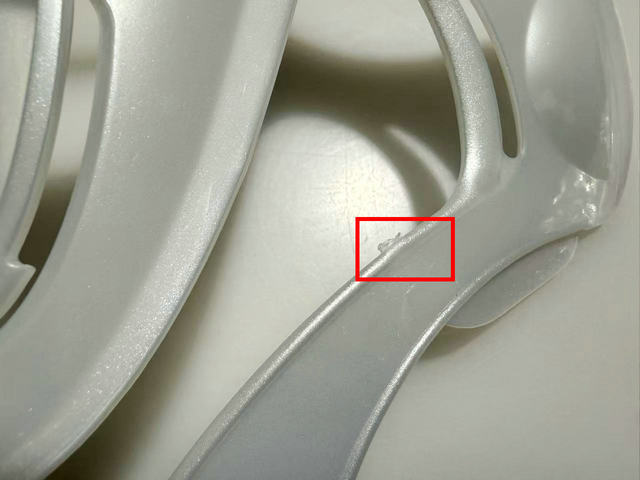
Injection Molding Flash
Flash occurs when molten plastic escapes from the mold cavity during the injection process and solidifies outside the intended part geometry.
It typically appears in areas such as:
the mold parting line
ejector pin locations
slider interfaces
venting areas
Flash may appear as a thin plastic film that extends beyond the edges of the molded part.
In high-volume production environments, even small amounts of flash can cause significant manufacturing challenges, including:
increased manual trimming operations
poor product appearance
assembly interference
higher scrap rates
For precision products, preventing flash is essential to maintaining consistent product quality.
Why Flash Happens in Injection Molding
Flash can be caused by several factors related to mold design, processing parameters, and machine performance.
Understanding the root cause is the first step in solving the problem.
1 Insufficient Clamping Force
During injection molding, the mold must remain tightly closed while molten plastic is injected under high pressure.
If the injection pressure exceeds the machine’s clamping force, the mold halves may separate slightly. Even a microscopic gap can allow molten plastic to escape, creating flash.
Solution
The injection molding machine must provide sufficient clamping force to keep the mold completely closed during the injection stage.
Engineers typically verify the clamping force requirement during mold design to ensure the selected machine can handle the injection pressure.
2 Worn Mold Parting Surfaces
Over time, mold components may experience wear due to repeated production cycles.
If the parting surfaces of the mold become worn or damaged, gaps may form between the mold halves.
These gaps allow molten plastic to leak out during injection.
Solution
Regular mold maintenance is essential to prevent flash caused by wear. In high-volume production molds, parting surfaces should be inspected and polished periodically.
Using high-quality mold steel can also extend mold life and reduce wear.
3 Excessive Injection Pressure
While high injection pressure can improve cavity filling, excessive pressure may force molten plastic into small gaps within the mold.
This can cause flash to appear along the parting line or around ejector pins.
Solution
Optimizing injection parameters—such as injection pressure, injection speed, and holding pressure—can reduce the risk of flash.
Balancing these parameters helps ensure the cavity is filled without overpacking the mold.
4 Poor Mold Design or Venting
Improper mold design can also contribute to flash defects.
If venting grooves are too large or if the mold parting surfaces are not properly aligned, plastic may leak out during the injection process.
Solution
Proper mold design is critical for preventing flash.
At CNMOULDING, our engineering team conducts DFM (Design for Manufacturing) analysis and Moldflow simulation to identify potential molding issues before the mold is manufactured.
Real Case Study: Medical Device Housing
A medical device manufacturer from Europe approached us with a quality problem involving flash on a plastic diagnostic device housing.
Because the product was used in a healthcare environment, strict cosmetic and dimensional requirements applied.
Project Details
Material: medical-grade PC
Part type: diagnostic device housing
Production volume: 600,000 parts per year
Problem Description
During production, visible flash appeared along the parting line of the molded parts.
Although the flash thickness was small, it interfered with the assembly of internal components.
Manual trimming was required, which increased production cost and slowed manufacturing.
Engineering Analysis
Our Shanghai engineering team performed a detailed analysis of the molding process.
The investigation revealed two main issues:
The mold parting surface had minor wear after extended production cycles.
Injection pressure settings were higher than necessary for the material and part geometry.
These factors allowed molten plastic to escape from the mold cavity.
Engineering Solution
To solve the flash issue, several improvements were implemented.
1 Mold Surface Reconditioning
The mold parting surfaces were re-polished to restore perfect alignment and eliminate micro gaps.
2 Injection Parameter Optimization
The molding process parameters were optimized, including:
reducing injection pressure
adjusting holding pressure
refining injection speed
3 Clamp Force Adjustment
The machine clamping force was slightly increased to ensure stable mold closure.
Final Results
After these improvements, the production results were significantly improved.
flash defects reduced by over 95%
manual trimming eliminated
production efficiency increased
The customer successfully resumed full production, and the product passed all quality inspections under ISO13485 medical manufacturing standards.
Best Practices to Prevent Flash in Injection Molding
Preventing flash requires a combination of proper mold design, machine selection, and process control.
Key recommendations include:
Use Adequate Clamping Force
Ensure the injection molding machine has sufficient clamp force to handle the required injection pressure.
Maintain Mold Surfaces
Regular mold maintenance prevents wear that can create gaps between mold components.
Optimize Injection Parameters
Balanced injection pressure and holding pressure help prevent excessive material flow outside the cavity.
Perform Moldflow Simulation
Simulation analysis helps identify potential molding issues before mold manufacturing begins.
Why Experience Matters in Mold Manufacturing
Injection molding defects such as flash often require experienced engineers to identify the true root cause.
At CNMOULDING (Shanghai), we combine:
over 25 years of injection mold manufacturing experience
advanced mold design technology
precision machining equipment
strict quality control systems
Our factory operates under ISO9001 quality management standards and ISO13485 certification for medical device manufacturing, ensuring reliable production for demanding industries.
Need Help Solving Injection Molding Defects?
If your project is experiencing flash defects, short shots, sink marks, or warpage issues, our engineering team can help analyze the problem and provide effective solutions.
CNMOULDING specializes in:
precision injection mold manufacturing
plastic injection molding production
mold design optimization
manufacturing troubleshooting
Contact our Shanghai engineering team today to discuss your project and receive professional support.

没有评论:
发表评论